Sewer Line Repair and Drain Work Under Hawaii Law
Sewer line trouble has a way of turning a normal day into a very short, very expensive one. A slow sink can wait a little while. A backed-up drain line, a sewage odor in the yard, or wastewater where it does not belong is different. People want action fast, and that urgency often leads to the same question: who is legally allowed to do the work in Hawaii?
That question matters more than many property owners realize. In Hawaii, plumbing is a licensed profession. A person may not act or hold themselves out as a plumber without a license, and plumbing work generally must be performed by a licensed journey worker plumber or master plumber. Apprentices and helpers can be involved, but only under supervision. That is the legal backdrop for nearly every discussion about drain cleaning, sewer line repair, fixture replacement, and larger plumbing projects.
For homeowners and property managers, the confusion usually starts with the word “emergency.” If a line is clogged and wastewater is not moving, it feels like an emergency, and in practical terms it often is. But Hawaii’s emergency exception for plumbing work is narrower than people expect. There is a limited exception for emergency plumbing repair work in a person’s principal residence, yet that exception does not apply to sewer lines, drains, gas lines, or certain fixtures such as heaters and water closets. In plain terms, the jobs that people most often try to tackle themselves in a panic, especially sewer and drain work, are specifically outside that exception.
That point alone changes how a homeowner should respond when a drain backs up or a sewer line fails.
Why sewer and drain work is treated differently
Anyone who has spent time around field plumbing work knows that sewer and drain systems are deceptively simple from the outside. Water goes down, waste goes away. When something interrupts that basic function, the fix can be anything from a straightforward cleaning to a major repair below grade. The difficulty is not just technical. It is also about health, property damage, and the way one mistake can travel through the system.
A blocked or broken sewer line affects more than one fixture. The symptom may show up in a shower drain, a floor drain, or a toilet, but the problem may be farther down the line. That is why drain cleaning and sewer line repair are not interchangeable terms, even though customers often use them together. A minor obstruction near a fixture is one thing. A damaged line, a recurring blockage, or a system-wide backup is another.
Under Hawaii law, that distinction matters because homeowners should not assume that urgency gives them legal room to perform the work themselves. The verified rule is clear enough to shape real decisions: the limited emergency repair exception does not extend to sewer lines or drains. If the job involves those parts of the plumbing system, the safer legal reading is that licensed professionals need to handle it.
For someone searching https://erickegfp192.terracolumn.com/posts/plumber-kona-services-often-listed-by-local-providers online for a “plumber near me” in a rush, this is not just a legal technicality. It is the difference between bringing in a properly qualified professional and relying on guesswork during a messy event.
What the licensing rule means in practice
The most important practical takeaway is straightforward. If the work is plumbing work, it generally must be done by a licensed journey worker plumber or master plumber in Hawaii. A company may market itself as a plumbing contractor, but the actual plumbing work must still be performed through the licensed individuals required by law. Hawaii’s Department of Commerce and Consumer Affairs also makes the broader oversight point clear: electrical and plumbing contractors must employ licensed electricians or plumbers to perform the actual work, and contractor licensing is tied to state oversight.
That state oversight matters on the ground. It means a homeowner should think beyond the truck logo, the website, or the ad copy. Whether a company offers water heater repair, solar water heater repair, commercial plumbing installation, or sewer line repair, the legal question is who is actually doing the plumbing work.
This becomes especially important in larger operations. On commercial sites, multiple trades may be present and project timelines can pressure everyone to move quickly. A commercial plumber working on tenant improvements, system alterations, or commercial plumbing installation still operates within the same basic licensing structure. Likewise, on residential jobs, apprentices and helpers can be part of the crew, but only under supervision. That is a normal and lawful part of the trade. What Hawaii law does not permit is unlicensed people independently acting as plumbers.
The emergency exception that people often misunderstand
In everyday conversation, owners use “emergency” loosely. A leaking line under a sink at 9:00 p.m. Is an emergency to the family dealing with it. A failed water heater can feel just as urgent, especially in a busy household or rental. But Hawaii’s emergency exception is not a blanket permission slip for do-it-yourself plumbing.
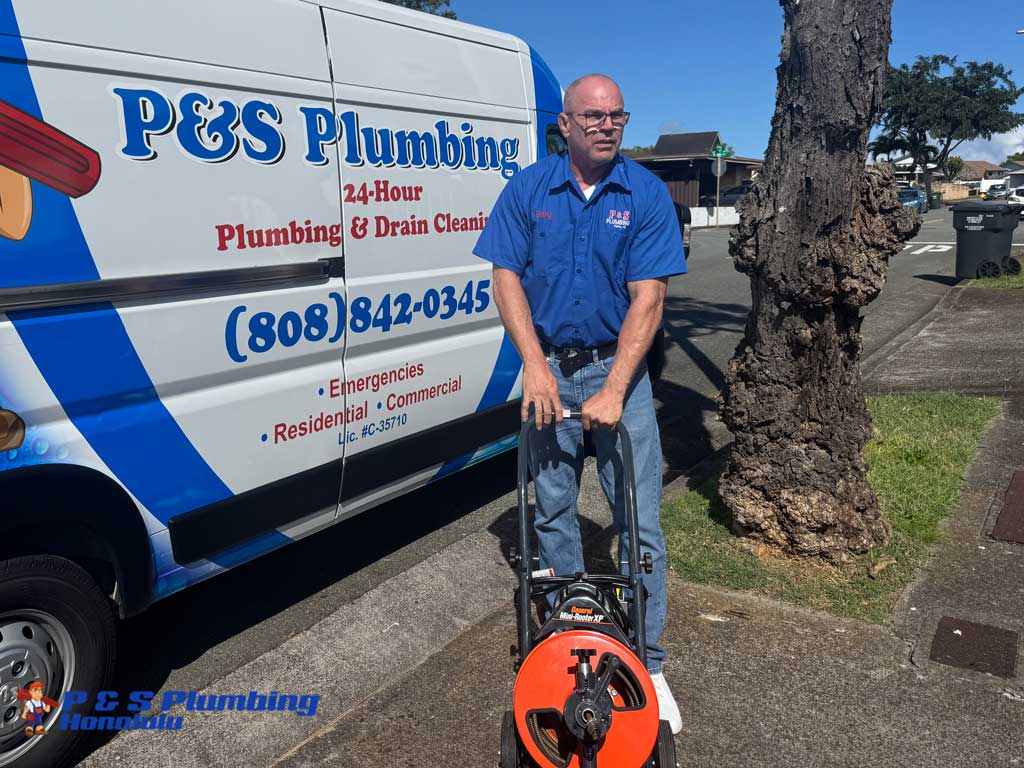
The verified rule is narrower and has clear exclusions. It allows limited emergency plumbing repair work in a person’s principal residence. Even there, the exception does not apply to sewer lines, drains, gas lines, or certain fixtures such as heaters and water closets.
That has several real-world implications.
If the issue is a backed-up drain, a failed sewer line, or a toilet problem tied to the kind of fixture excluded from the exception, the owner should not assume the law lets them perform repair work just because the situation is urgent. The same caution applies to a heater-related issue, which is particularly relevant to water heater repair and solar water heater repair searches. A homeowner may take immediate protective steps, such as shutting off water if appropriate and calling for help, but the repair work itself is a different question.
An emergency plumber is still the right call when quick response is needed. The legal point is that “emergency” changes how fast you need service, not who may lawfully perform the plumbing work.
Common homeowner scenarios where the legal line matters
A lot of trouble starts with a symptom that appears small. The kitchen sink gurgles. The shower drains slowly. One toilet bubbles when another fixture runs. Then a pattern develops. At that stage, many owners are tempted to try deeper drain work themselves because the problem seems localized and manageable.
In practice, these cases are exactly where caution pays off. A recurring drainage problem can indicate a larger drain issue or a sewer line problem. Since the verified Hawaii emergency exception does not cover drains or sewer lines, those are poor candidates for improvised repair. Even when the final fix turns out to be simpler than feared, the legal and practical route is still to involve a licensed plumber.
Another common situation involves replacement decisions under pressure. A homeowner dealing with wastewater backup may ask whether a drain cleaning attempt is enough or whether a section of line must be opened, repaired, or replaced. That decision calls for judgment. In the trade, judgment is often more valuable than speed. Sending the wrong person to a sewer problem can turn a contained repair into repeated service calls, unfinished work, or a larger cleanup.
The same principle shows up in fixture-related emergencies. If a heater is involved, Hawaii’s limited principal-residence emergency exception does not apply to heaters. That matters when owners try to bridge the gap between a service outage and a full repair. Calling a licensed plumber is not only the safer choice, it is the choice that aligns with the law as verified here.
How to evaluate a plumbing company without getting lost in marketing
People rarely shop calmly for sewer work. They search fast. They compare too little. They latch onto whatever result promises same-day help. There is nothing wrong with wanting quick service, especially if the house cannot use sinks, showers, or toilets normally. But speed should not crowd out the licensing question.

A few checks go a long way:
- Ask whether the plumbing work will be performed by a licensed journey worker plumber or master plumber.
- Confirm that the company is operating as a licensed contractor where required and that actual plumbing work is done by licensed plumbers.
- Be cautious if anyone suggests that a sewer line or drain repair falls under a broad homeowner emergency exception.
- If apprentices or helpers are on site, make sure their work is being supervised as required.
- For larger or specialized projects, ask directly whether the scope also calls for other licensed trades.
That last point deserves more attention than it usually gets. Hawaii wastewater guidance notes that some property wastewater projects may also require a licensed plumber and or electrician, depending on the scope of work. That means the line between a “simple plumbing problem” and a broader regulated project is not always obvious at first glance. A property owner does not need to become a code specialist overnight, but they do need to understand when a project may involve more than one licensed trade.
Residential work in Kona and similar service markets
In places like Kailua-Kona and the broader West Hawaii market, service listings commonly advertise a wide range of plumbing work: residential and commercial plumbing, drain cleaning, sewer line repair, leak detection, water heater repair and installation, solar water heating services, and commercial plumbing installation. For a customer searching “plumber Kona,” that breadth can be useful, but it can also blur distinctions that matter legally.
Not every plumbing company handles every kind of sewer or drain problem the same way. Some market heavily around residential service calls. Others are more focused on larger commercial work. Some will emphasize water heater repair or solar water heater repair because that is a common call type in Hawaii. Others lead with sewer line repair and drain cleaning. The legal baseline remains the same across those categories: actual plumbing work must generally be done by licensed plumbing professionals, with apprentices and helpers under supervision.
That consistency is helpful. It means the owner does not need to memorize different legal standards for every service category. Whether the problem is a clogged branch drain, a suspected sewer line issue, or a failed heater, the first legal question is still who is performing the work.
The commercial side is not a loophole
Business owners sometimes assume that because they routinely hire contractors, the legal obligations sit somewhere upstream with the vendor and no longer concern the property owner or tenant. In reality, commercial plumbing work raises the stakes, not because the legal rule changes, but because more people, more fixtures, and more business disruption are involved.
A restaurant, retail center, office, or mixed-use property may need a commercial plumber for anything from drainage issues to tenant improvements and commercial plumbing installation. If the work affects wastewater systems or intersects with other building systems, the scope can widen quickly. Hawaii’s verified guidance that some wastewater projects may require a licensed plumber and or electrician is especially relevant here. Coordination matters. So does clarity about who is responsible for each part of the work.
Owners and managers should be wary of informal fixes during off-hours shutdowns. The pressure to reopen can lead to bad choices, especially when drains back up before a weekend or holiday. In my experience, the most expensive commercial plumbing jobs are often not the ones that began severely. They are the ones that began with a small issue, a rushed workaround, and no disciplined handoff to properly licensed trades.
Why continuing competency matters to property owners
Most customers never ask what licensed plumbers have to do to stay current, but they should care. Hawaii plumber license renewals for the current cycle ending June 30, 2027 require continuing competency in the 2021 Uniform Plumbing Code. That may sound administrative, yet it has real value at the service-call level.
Continuing competency requirements signal that the state expects licensed plumbers to remain current in the applicable code framework. For owners, that is one more reason not to treat licensing as a box-checking exercise. When hiring for sewer line repair, drain cleaning, water heater repair, or commercial plumbing installation, the credential is tied not only to legal authority to perform the work but also to an ongoing expectation of professional competence.
That does not mean every job becomes a code seminar on site. It means the state has built a system in which plumbing work is tied to licensure, supervision rules, and renewal standards. For customers, that structure is part of the value of hiring correctly.
What a prudent response looks like when drains or sewers fail
When a drain line backs up or a sewer issue becomes obvious, people often ask what they can do immediately without crossing legal lines. The answer depends on the specific situation, and no single script fits every home or building. Still, there is a sensible pattern.
First, focus on limiting damage. If wastewater is backing up, stop using affected fixtures. Second, call a licensed plumber promptly, especially if the issue appears to involve drains or sewer lines. Third, describe symptoms rather than self-diagnosing too aggressively. A good service call often starts with careful observation, not certainty. Whether someone found standing water, repeated backups, odors, or multi-fixture drainage problems can be more useful than a guessed-at cause.
One more practical point is worth making. Customers often use “drain cleaning” as if it were always a routine maintenance item. Sometimes it is. Sometimes it is the first visible stage of a larger sewer line repair problem. That is exactly why Hawaii’s legal approach puts the work in licensed hands rather than treating it as casual handyman territory.
The legal bottom line for Hawaii property owners
Sewer and drain problems are stressful because they force quick decisions under dirty conditions. Hawaii law gives a clear framework for those decisions. Plumbing is a licensed profession. A person may not act or hold themselves out as a plumber without a license. Plumbing work generally must be done by a licensed journey worker plumber or master plumber, with apprentices and helpers working only under supervision. Hawaii does recognize a limited emergency plumbing repair exception for a person’s principal residence, but that exception does not apply to sewer lines, drains, gas lines, or certain fixtures such as heaters and water closets.
For homeowners, that means a drain backup or suspected sewer line failure is not a safe area to improvise legally. For anyone searching for a plumber near me, a plumber Kona, or an emergency plumber, licensing should be part of the first conversation, not an afterthought. For business owners, property managers, and developers, the same rule carries into commercial plumbing installation and broader wastewater-related work, where some scopes may also require a licensed plumber and or electrician.
The practical lesson is simple and durable: when the work touches drains, sewer lines, or other regulated plumbing systems in Hawaii, hire with the law in mind from the start. It protects the property, shortens confusion, and gives the repair the professional footing it should have had from the first call.
Name: P&S Plumbing Kona
Address: 73-5573 Kauhola St Bay #11, Kailua-Kona, HI 96740, United States
Phone: 808-325-3892
Website: https://www.psplumbinghawaii.com/
Email: [email protected]
Hours:
Sunday: Open 24 hours
Monday: Open 24 hours
Tuesday: Open 24 hours
Wednesday: Open 24 hours
Thursday: Open 24 hours
Friday: Open 24 hours
Saturday: Open 24 hours
Time zone: Hawaii-Aleutian Time
Open-location code / Plus code: MXQJ+P4 Kailua-Kona, Hawaii, USA
Map/listing URL: https://www.google.com/maps/search/?api=1&query=Google&query_place_id=ChIJwc_thcwNVHkRhwCIvILuP8w
Embed iframe:
Socials:
https://www.facebook.com/psplumbingkona/
https://x.com/PSPlumbingKona
https://soundcloud.com/p-s-plumbing-kona
https://www.youtube.com/@PSPlumbingKonaHawaii
P&S Plumbing Kona provides plumbing services from its Big Island headquarters on Kauhola Street in Kailua-Kona.
The official website lists Kona phone service at 808-325-3892 and also lists Hilo and Honolulu service contacts.
P&S Plumbing provides residential plumbing, commercial plumbing, drain and sewer service, water heater work, plumbing repairs, leak detection, fixture repair, kitchen plumbing, bathroom plumbing, and emergency plumbing support.
The official site lists the Big Island headquarters at 73-5573 Kauhola Street, Bay 11, Kailua Kona, HI 96740.
The company’s official site lists Hawaii State License Number CT-35710 and describes P&S Plumbing as licensed and insured.
Customers can contact P&S Plumbing Kona for drain cleaning, sewer-line concerns, water heater service, clogged toilets, fixture repairs, plumbing leak detection, pipe-lining needs, bathroom remodeling plumbing, kitchen plumbing, commercial plumbing, and urgent plumbing requests.
For plumbing service in Kailua-Kona and West Hawaii, call 808-325-3892 or visit https://www.psplumbinghawaii.com/
The public map listing uses plus code MXQJ+P4 Kailua-Kona, Hawaii, USA and can help customers find P&S Plumbing Kona near Kauhola Street.
Popular Questions About P&S Plumbing Kona
What does P&S Plumbing Kona provide?
P&S Plumbing Kona provides plumbing services for residential and commercial customers, including drain cleaning, sewer and drain service, water heater service, plumbing repairs, fixture repair and installation, leak detection, kitchen plumbing, bathroom plumbing, and 24-hour emergency plumbing.
Where is P&S Plumbing Kona located?
The official contact page lists the Kona location at 73-5573 Kauhola Street, Bay 11, Kailua Kona, HI 96740. The listing address is 73-5573 Kauhola St Bay #11, Kailua-Kona, HI 96740, United States.
What phone number should Kona customers call?
The official website lists Kona phone number 808-325-3892.
What is the email address for P&S Plumbing Kona?
The email address is [email protected].
What are P&S Plumbing Kona’s hours?
The listing hours show P&S Plumbing Kona as open 24 hours a day, seven days a week, Hawaii-Aleutian Time. The official website also references 24-hour emergency plumbing service.
Is P&S Plumbing licensed?
The official website lists Hawaii State License Number CT-35710. Customers can confirm license status directly with the relevant Hawaii licensing authority before hiring.
Does P&S Plumbing Kona offer emergency plumbing?
Yes. The official website references 24-hour emergency plumbing service and emergency services availability.
Does P&S Plumbing handle water heaters?
Yes. The official website lists water heater installation and repair, including tankless, solar, conventional water heaters, and boiler setup and repair.
What areas does P&S Plumbing serve from Kona?
The official service-area page lists Big Island / Kona communities including Kona, Holualoa, Kukio, Waikoloa Village, Kalaoa, Captain Cook, Kahaluu-Keauhou, Keauhou, Kainaliu, Waimea, Puako, and Kealakekua.
How do I contact P&S Plumbing Kona?
Call 808-325-3892 or visit https://www.psplumbinghawaii.com/. Social profiles: Facebook, X, SoundCloud, and YouTube.
Landmarks Near Kailua-Kona, HI
Kauhola Street: The street listed for P&S Plumbing Kona’s Big Island headquarters and a practical reference point for the Kailua-Kona location.
Queen Kaʻahumanu Highway: A major West Hawaii route connecting Kailua-Kona, Kona International Airport, Waikoloa, and nearby coastal communities.
Ellison Onizuka Kona International Airport: A major transportation landmark north of Kailua-Kona and near local service routes.
Kailua-Kona town: A central West Hawaii community served by local plumbing contractors.
Old Kona Airport State Recreation Area: A well-known Kailua-Kona landmark near residential and commercial areas.
Kailua Pier: A central waterfront landmark in Kailua-Kona and a common local reference point.
Aliʻi Drive: A major coastal route with homes, condos, restaurants, shops, and visitor properties.
Honokōhau Harbor: A marina and commercial harbor area near Kailua-Kona and local business routes.
Kaloko-Honokōhau National Historical Park: A major cultural and coastal landmark north of Kailua-Kona.
Keauhou: A South Kona community with homes, condos, resorts, and plumbing service needs.
Holualoa: An upland Kona community with residential properties and local businesses.
Waikoloa Village: A West Hawaii community listed on P&S Plumbing’s service-area page.
Waimea: A Big Island community listed on P&S Plumbing’s service-area page.
Kealakekua: A South Kona community listed on P&S Plumbing’s service-area page.
Captain Cook: A South Kona community listed within P&S Plumbing’s Big Island / Kona service-area references.
For residential plumbing, commercial plumbing, drain cleaning, sewer-line repair, water heater service, leak detection, fixture work, bathroom plumbing, kitchen plumbing, or 24-hour emergency plumbing near these Kailua-Kona and West Hawaii landmarks, contact P&S Plumbing Kona at 808-325-3892 or visit https://www.psplumbinghawaii.com/